
Asma
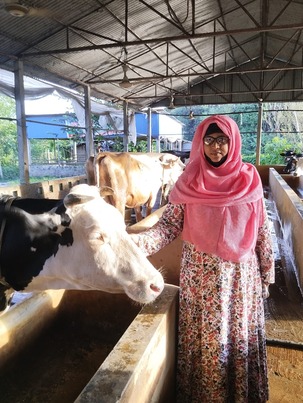
The morning sun had barely risen when Asma stepped into the dew-soaked field to cut grass, the hem of her saridarkened with dampness. Behind her, whispers carried the weight of judgment: “ So now the wife will go to the fields to cut grass?”
But Asma had already steppedbeyond the threshold, and once a woman crosses that line, the world can nevermake her smaller again.
Today, Asma runs a thriving dairybusiness with 18 cattle producing up to 90 kg of milk a day, earning 1.2million BDT in annual profit, employing two local workers, and owning 48decimals of land and a market shop. Her success funds her eldest son’s engineeringdegree, supports her younger son’s schooling, and provides regular meals for 10orphans in her community.
It began in 2019, when her husband's single income could no longer cover household costs and her two sons 'education fees. With a BURO Bangladesh agricultural loan of 100,000 BDT, Asma bought a dairy cow and began supporting her household by selling its milk. She chose cattle rearing as her main profession, investing all her focus inbuilding a small livestock venture. She learned to care for the cattle herself, manage feed, and negotiate milk prices in the market. Also, Asma completed a three-month livestock management training course at Faridpur Youth Development Center.
With income from milk sales, Asmagradually expanded her farm, taking successive loans from BURO Bangladesh topurchase additional cows and improve infrastructure - all repaid through herdairy profits.
Expansion wasn’t just business growth; it was defiance. In a conservative community where women were expected to “stay inside and do women’s work,” every trip to the market or fieldchallenged social norms.